At Alexander Knight & Co, we take great pride in the people who grow with our business and this year, we are delighted to celebrate a significant milestone for one of our own.

Jack Crowther marks 10 years with us, having joined us as a trainee back in 2016 straight from his A-levels.

Over the past decade, Jack has demonstrated exceptional commitment, professionalism and ambition, progressing through his studies to ultimately become ACA qualified.

Along the way, Jack has become an integral member of our team – supporting our client base of entrepreneurs and representing our firm in national and international networking events, such as the MGI Talent meeting in Brussels in 2023. In addition he fully embraces our ongoing ESG work.

Jack’s journey reflects not only his own dedication but also our belief in nurturing talent from the very start of their careers. From trainee to a highly skilled and trusted member of the team, his development has been a pleasure to support.

Today, Jack plays a key role in delivering for our clients. His technical expertise, combined with a deep understanding of their businesses, ensures that he provides consistent, high-quality service that our clients value and rely on. Many of those clients have worked with Jack for years, benefiting from his continuity, insight and approachable manner.

Murray Patt, founder of Alexander Knight & Co, said:

“Jack’s progression over the last ten years has been fantastic to see. He joined us at the very start of his career and has developed into a highly capable and trusted professional. His commitment to both his studies and our clients has been exemplary and he represents exactly what we stand for as a firm.”

Alison Spier, head of HR and Training at Alexander Knight & Co, added:

“Jack’s journey is a great example of what can be achieved with the right attitude and support. From day one, he has shown a willingness to learn and develop, and it’s been incredibly rewarding to see him qualify as an ACA. We are proud to have played a part in his development and excited to see what the future holds for him.”

As we celebrate this milestone, we also look ahead. Jack continues to play an important role in supporting our clients and contributing to the ongoing success of the firm.

Congratulations, Jack! Here’s to the next chapter!


Hale station is sponsored by accountants Alexander Knight & Co

At Alexander Knight & Co, we are proud to be the official sponsor of Hale Railway Station, helping to support and care for this important local transport hub used by thousands of residents, commuters and visitors each year.

As part of our ongoing sponsorship, we are now developing plans to organise a volunteer team from within our firm to help further enhance the station environment. Working in partnership with the dedicated volunteers from the Friends of Hale Station, colleagues from Alexander Knight & Co will take part in activities such as painting, cleaning and general upkeep around the station.

While these volunteer plans are currently being organised, our team already takes pride in keeping an eye on the station and helping ensure it remains clean, tidy and welcoming for local passengers who rely on this key gateway to the Hale community.

Alison Spier, Head of HR and Training at Alexander Knight & Co, said:

“We’re very proud to be the official sponsor of Hale Station and to support such an important part of our local community. Many of our team and clients use the station regularly, so it always feels natural for us to play a role in helping keep it looking its best.

“We are pleased to have a volunteer initiative where colleagues from our practice spend time at the station helping with painting, cleaning and general care, working alongside the fantastic volunteers from the Friends of Hale Station.”

We will share further updates once the volunteer days and work have been confirmed.

In the meantime, Alexander Knight & Co will continue supporting Hale Station and working with local partners to ensure it remains a welcoming and well-maintained space for the community it serves as part of our ongoing ESG work.


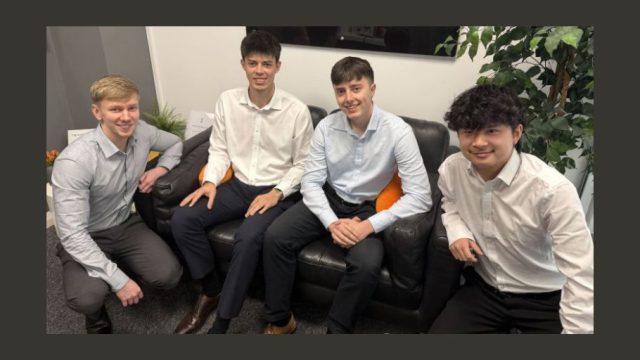
Four members of the Alexander Knight & Co team recently attended the MGI Worldwide Talent Meeting 2026, an event organised by MGI Worldwide, the global accounting association of which the firm is a member.

The meeting brought together next-generation accountancy professionals from across Europe to connect, share ideas and develop their skills.

Owen Li, Ciaran Morgan, Jack Wareham and Dan Williams.

This year’s programme focused on client communication, leadership and team collaboration – all essential skills for the future of the profession. We’re incredibly proud of Jack Wareham, Owen Li, Dan Williams and Ciaran Morgan (add them on LinkedIn!) for representing Alexander Knight & Co and building relationships with peers from across the international MGI network.

Alison Spier, HR & Training Manager at Alexander Knight & Co, said:

“Developing our people is central to the long-term success of the firm. Opportunities like the MGI Talent Meeting give our team valuable exposure to new ideas, different perspectives and international connections. It’s fantastic to see Jack, Owen, Dan and Ciaran representing the firm so well and gaining insights they can bring back to benefit our clients and colleagues.”

The talented quartet are now looking forward to putting their learning, networking and inspiration into practice as they continue supporting clients and colleagues throughout 2026.

In April, we will be sending a delegation from Alexander Knight & Co to Athens for the 2026 European Conference which promises to be a great mix of work, inspiring conversations and authentic Greek experiences.


Some of our clients are using a commercial opportunity that presents itself as a result of forthcoming changes to UK accounting standards (FRS 102), relating to accounting periods beginning on or after 1 January 2026.

While these changes are technical in nature, they may present a useful opportunity for some businesses to review their plans – particularly if you are:

  • considering buying or acquiring a business
  • planning to raise funding or refinance, where covenant measures matter
  • investing in capital infrastructure
  • or thinking about a future disposal or exit

The way your accounts look (and the timing of when changes take effect) can influence how your business is perceived by lenders, investors and buyer – the new rules may improve your results, particularly EBITDA.

For some clients, adopting the new rules earlier (where permitted) or planning carefully for the transition may be worth considering.

What is changing?

The most significant amendments to FRS 102 are:

1. Leases (Section 20)

  • Most leases will move onto the balance sheet, with a right-of-use asset and a corresponding lease liability recognised.
  • This will increase reported assets and liabilities and may affect key metrics.
  • Common examples include leased offices and vehicles on contract hire.
  • Additional disclosures will also be required.

2. Revenue recognition (Section 23)

  • A new, principles-based five-step model for recognising revenue will be introduced.
  • This replaces much of the existing guidance and may change the timing of revenue recognition, particularly for contracts with multiple elements, variable consideration, or longer-term arrangements.
  • There are also some more minor disclosure changes.

Why this matters?

These amendments can have a noticeable impact on headline figures and ratios such as EBITDA, gearing and interest cover.

As a result, they may affect funding discussions, covenant compliance and external perceptions of performance.

For businesses with a December year-end (and no long or short accounting periods), the first accounts affected would be for the year ending 31 December 2026.

If there is concern that the changes could have an adverse impact, there may be planning options available now, including consideration of transition timing.

Next steps

Alexander Knight & Co is very happy to support you with impact assessments, transition planning and implementation of the new requirements.

If you think a conversation might be helpful, particularly in the context of future plans or significant transactions, please do get in touch with Murray Patt directly.

Bridgewater Home Care UK has appointed Alexander Knight & Co to provide accounting, tax, outsourcing and advice to its growing national franchise network.

We will work closely with Bridgewater’s leadership team to provide financial oversight, reporting and advisory support as the organisation continues to expand its network of home care businesses nationwide.

The relationship will be led by Murray Patt, founder of Alexander Knight & Co, who will oversee the firm’s work with Bridgewater and provide strategic financial guidance to the franchise as the business continues to scale.

As part of the support provided to the franchise, Jane Marquez, of Alexander Knight & Co, will be responsible for the outsourcing service.

Jane will support day-to-day finance queries and help ensure franchise partners have access to clear reporting and practical financial guidance, drawing on the wider expertise of the Alexander Knight & Co team.

Phil Eckersley, Founder and Managing Director of Bridgewater Home Care

Phil Eckersley, Founder and Managing Director of Bridgewater Home Care

Phil Eckersley, Founder and Managing Director of Bridgewater Home Care, said:

“As our franchise network continues to grow, it is important that we have the right professional partners in place to support both our head office team and our franchisees. Alexander Knight & Co impressed us with their experience advising entrepreneurial businesses and their practical, approachable style. We are looking forward to working with Murray and the wider team as we continue to develop the Bridgewater network.”

Murray Patt, founder of Alexander Knight & Co, added:

“Bridgewater Home Care has built a strong and values-led franchise network and we are delighted to have been appointed as the new accountants. Our role will be to provide the financial oversight and support needed as the business continues to grow, while ensuring franchise partners across the network have access to clear, reliable financial guidance. We are excited to play a positive role in its growth strategy.”

As part of the arrangement, Alexander Knight & Co will provide ongoing accounting support to the Bridgewater Home Care UK network, helping ensure franchisees benefit from robust financial systems, compliance support and practical advice as they grow their businesses.

The Chancellor’s Spring Statement did not introduce any major new tax measures, but it provides an important update on the economic outlook and public finances.

With tax thresholds remaining frozen and growth forecasts modest, the overall tax burden is expected to remain high in the coming years.

We have summarised the key points and implications for individuals and businesses in more detail in our downloadable guide which you get by clicking on the image below.

Spring Statement 2026

AI

There are thousands of AI tools on the market, but most business owners don’t need dozens of platforms. In reality, a small handful can make a genuine difference to your productivity as a business owner.

Here are five of the most useful AI tools I’m seeing businesses successfully adopt in 2026 and how they’re being used in the real world.

  1. ChatGPT – your all-purpose business assistant

ChatGPT has quickly become the go-to AI tool for many businesses – and with good reason. It can help draft emails, write marketing copy, summarise documents, create meeting agendas, generate ideas, and even explain complex topics in plain English.

Business owners are using it as a first draft tool, not to replace judgement, but to save time staring at a blank page. Used properly it can speed up everyday tasks and frees up time for more valuable work.

  1. Claude – for longer documents and deeper thinking

Claude is similar to ChatGPT, but particularly strong when working with longer documents. Many businesses use it to review reports, policies, contracts and proposals. It can be helpful in summarising key points in lengthy detailed documents.

It’s especially useful for owners who regularly deal with detailed written information and want clearer insight without wading through pages of text.

  1. Otter – turning conversations into action

Otter is an AI transcription tool that records meetings and turns them into searchable notes and summaries. It can capture key points, decisions and actions automatically, reducing the need for manual note-taking.

Businesses are using it for management meetings, client calls and planning sessions. It helps to ensure nothing is missed and actions are followed up properly.

  1. Canva AI – simple, fast design

Canva’s AI features allow businesses to quickly create professional-looking presentations, social media posts and marketing materials. It can suggest layouts, generate visuals and adapt designs to different formats.

For small teams without in-house design support, this dramatically improves the quality and consistency of output with very little effort.

  1. AI-powered CRM tools – smarter sales follow-up

Many customer relationship management (CRM) systems used by our clients now include AI features that score leads, suggest follow-ups and highlight sales opportunities based on customer behaviour.

This helps businesses prioritise the right conversations at the right time, rather than relying on guesswork or memory.

A final word of advice

AI works best when it supports people, not replaces them. The most successful businesses experiment sensibly and keep humans firmly in control of decisions. You don’t need to use every tool – just the right ones, used well.

In 2026, AI isn’t about being more technical. It’s about being more efficient, more informed and more confident in how you run your business.

We are delighted to confirm the appointment of Owen Li as a Trainee Accountant, further strengthening our Hale-based accounts and audit team as we continue to support clients into 2026.

Owen joins Alexander Knight & Co after graduating from the University of Liverpool, where he completed a degree in Accounting and Finance. In his new role, Owen will work across accounts preparation and audit, supporting a broad portfolio of clients and developing his professional training within the firm.

The appointment reflects our continued investment in early-career talent and our commitment to nurturing a strong team capable of delivering high-quality support to entrepreneurs.

We are already accepting applications for our popular summer 2026 graduate trainee programme.

Murray Patt, founder of Alexander Knight & Co, said:

“We’re delighted to welcome Owen to our practice. He impressed us with his academic background, attitude and enthusiasm for developing his career in accountancy. As we look ahead to 2026, investing in talented individuals like Owen is key to ensuring we continue to deliver the level of service our clients expect.”

Owen’s arrival comes at a time of sustained growth for Alexander Knight & Co, as we continue to expand our client base and enhance our accounts and audit capabilities.

Alexander Knight & Co is also member of international accounting association MGI Worldwide enabling our team to access international training and development opportunities as well as serve clients looking to invest in the UK.

This year, instead of printing and posting physical Christmas cards, we have decided to make a donation to Willow Wood Hospice and the CAFT (Children’s Adventure Farm Trust) Christmas Appeal in Altrincham which are both close to the hearts of our staff.

On behalf of everyone at Alexander Knight & Co we wish you a Merry Christmas and a Happy and Healthy 2026! 

After numerous rumours and an early leak of the Office of Budget Responsibility’s report on their findings, Rachel Reeves delivered her 2025 Budget on 26 November 2025 which she stated took the ‘fair and necessary choices to deliver on the government’s promise of change’.

Personal Tax

The government is extending the freeze of the Income Tax Personal Allowance, higher rate threshold and additional rate threshold from April 2028 to April 2031.

Several changes were announced to the rates for property, dividend and savings income:

  • The government will create separate tax rates for property income. From 2027/28, the property basic rate will be 22%, the property higher rate will be 42%, and the property additional rate will be 47%.
  • From 2026/27, the ordinary and upper rates of taxation on dividends will be increased by 2% to 10.75% and 35.75%. The additional rate for dividend income will remain unchanged at 39.35%.
  • From 2027/28, all rates applicable to savings income will be increased by 2%. The savings basic rate will become 22%, the savings higher rate will become 42% and the savings additional rate will become 47%. The Starting Rate for Savings will be retained at £5,000 for 2026/27 and will stay at this level until 5 April 2031.

In addition, certain reliefs will now only be applied to property, savings and dividend income after they have been applied to other sources of income. This change will take effect from 6 April 2027.

From 6 April 2027, the annual Individual Savings Account (ISA) cash limit will be set at £12,000, within the overall annual ISA limit of £20,000. Savers over the age of 65 will continue to be able to save up to £20,000 in a cash ISA each year. Other limits remain £4,000 for Lifetime ISAs and £9,000 for Junior ISAs and Child Trust Funds until 5 April 2031.

The Primary Threshold, Secondary Threshold, Lower Profits Limit, Upper Earnings Limit (UEL) and Upper Profits Limit for National Insurance contributions (NICs) will be maintained at their current levels until April 2031 as well as other employer NICs relief thresholds aligned with the UEL. The Lower Earnings Limit, Small Profits Threshold and the rates of voluntary Class 2 and Class 3 contributions will be increased by 3.8% from 2026/27. In addition, from 6 April 2026, the government will remove access to pay voluntary Class 2 NICs abroad and increase the initial residency or contributions requirement to pay voluntary NICs outside of the UK to ten years.

Employment

The government will charge employer and employee NICs on pension contributions above £2,000 per annum made via salary sacrifice. This will take effect from 6 April 2029.

The government will extend the employer NICs relief for employers hiring veterans in their first civilian role to April 2028.

From 1 April 2026, the National Living Wage will increase by 4.1% to £12.71 per hour. The National Minimum Wage for 18-20 year olds will also increase by 8.5% to £10.85 per hour and for 16-17 year olds and apprentices by 6.0% to £8.00 per hour.

In terms of benefits, the government will increase the Van Benefit Charge and Car and Van Fuel Benefit Charges by CPI from 6 April 2026. The government will delay changes to benefit in kind rules for Employee Car Ownership Schemes until 6 April 2030.

Capital Taxes

The Inheritance Tax nil rate bands are already set at current levels until April 2030 and will stay fixed at these levels for a further year until April 2031.

The forthcoming combined allowance for the 100% rate of agricultural property relief and business property relief will also be fixed at £1 million for a further year until 5 April 2031. Any unused £1 million allowance will be transferable between spouses and civil partners from 6 April 2026, including if the first death was before 6 April 2026.

The government will reduce the Capital Gains Tax relief available on qualifying disposals to Employee Ownership Trusts from 100% of the gain to 50%. This will take effect from 26 November 2025.

Business

The government will introduce a new 40% First Year Allowance (FYA) for main rate expenditure (including most expenditure on assets for leasing and expenditure by unincorporated businesses) from 1 January 2026. From 1 April 2026 for Corporation Tax and 6 April 2026 for Income Tax, main rate writing down allowances will reduce from 18% to 14%.

The government will extend for a further year the 100% FYA for qualifying expenditure on zero emission cars and electric vehicle (EV) chargepoints until 31 March 2027 for corporation tax purposes and 5 April 2027 for Income Tax purposes.

Eligibility of companies for the EMI scheme will be expanded. The government will increase the employee limit to 500, the gross assets test to £120 million, and the company share option limit to £6 million from April 2026.

Access to the Venture Capital Trust (VCT) and Enterprise Investment Schemes (EIS) will also be extended to more companies. The government will increase the VCT and EIS company investment limit to £10 million (£20 million for Knowledge Intensive Companies (KICs)) and increase the lifetime company investment limit to £24 million, and £40 million for KICs. The gross assets test will increase to £30 million before share issue, and £35 million after, from April 2026. However, the rate of VCT Income Tax relief will decrease to 20% from 30%.

A new UK Listing Relief will be introduced which provides a three-year exemption from Stamp Duty Reserve Tax for companies listing in the UK, effective from 27 November 2025

Other matters

  • The government will introduce the High Value Council Tax Surcharge, a new charge on owners of residential property in England worth £2 million or more, starting in 2028/29.
  • The government will extend the temporary 5p fuel duty cut for a further five months, with the cut being reversed in three stages from September 2026.
  • The two-child limit in the Universal Credit Child Element will be removed from April 2026.
  • The government will strengthen HMRC powers to tackle fraud within the Construction Industry Scheme, increase the rewards paid to informants of high-value tax fraud and introduce new powers to tackle promoters of marketed tax avoidance.
  • However, following consultation, the government will not regulate tax advisers and will work in partnership with the sector to raise standards in the tax advice market.

For more information about how the Budget will affect you and your business contact our team.